Cardiopulmonary resuscitation (CPR) and an automated external defibrillator (AED) can support a person whose heart has stopped while emergency services are on the way. If someone is unresponsive and not breathing normally, call 120 in China, ask for an AED and follow dispatcher instructions. Training and practice are the best way to learn the actions before an emergency.
Recognise and call
Check that the scene is safe enough to approach. If the person does not respond and is not breathing normally or only gasping, activate emergency help immediately. Give the dispatcher the exact address and send another person for an AED if available. Do not spend a long time searching for a pulse if you are a lay responder. A second person can guide the ambulance to the patient.
Begin CPR
Place the person on a firm surface and start chest compressions in the centre of the chest. Current AHA guidance for adults emphasises a rate of 100–120 compressions per minute and a depth of about 5–6 cm, allowing the chest to recoil and limiting interruptions. A trained rescuer can add breaths according to the course they completed; an untrained bystander can follow dispatcher-guided compression-only CPR. Child and infant techniques differ and should be learned in a suitable course.
Use the AED as soon as available
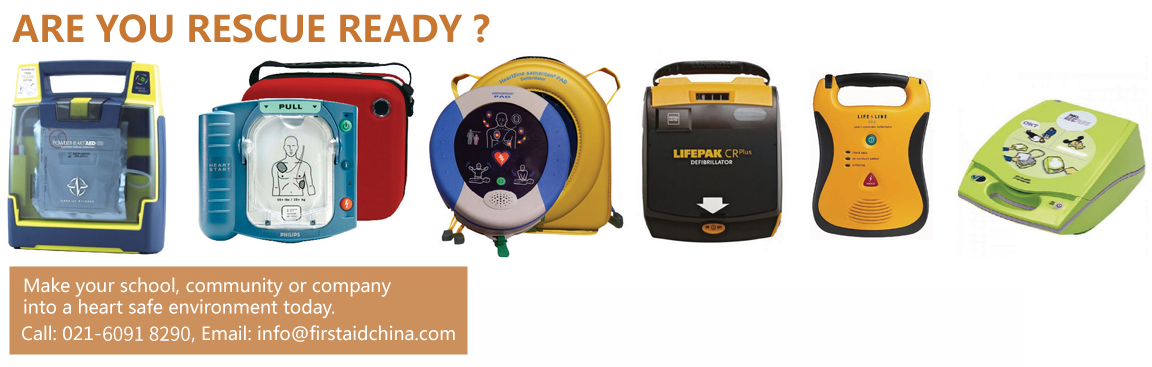
Turn it on and follow its voice and visual prompts. Expose and dry the chest as needed, attach pads as pictured and make sure no one touches the person while the AED analyses or delivers a shock. Resume CPR when prompted. The device guides the shock decision, but it does not replace the call for emergency care or continuous help.
Train the local team
A workplace or school should know where its AED is, who checks pads and batteries, and how to reach it quickly. FirstAidChina offers CPR/AED and first-aid training for individuals and groups; a named course with hands-on practice is more useful than trying to memorise a page during an emergency.
What to expect in a CPR class
An effective class allows each learner to practise compressions on a manikin, attach AED trainer pads and respond to feedback. It should explain when to call for help and how the device prompts work. If the audience includes parents, ask for child and infant practice under the named syllabus. A workplace may add a short scenario using its actual AED route and building address. Repeating the skill later is important because a reader cannot acquire reliable technique from text alone. FirstAidChina can discuss class options for individuals or groups and connect training to equipment readiness.
CPR across different age groups
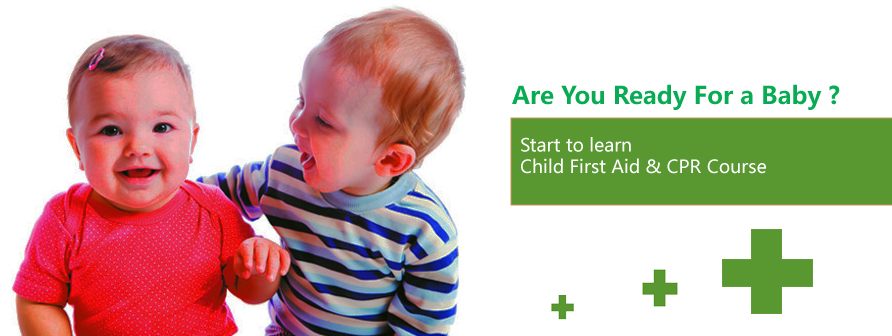
For an infant or child who is unresponsive and not breathing normally, call 120 and start CPR while another person brings an AED if available. The 2025 AHA pediatric guideline recommends compressions at 100–120 per minute to about one-third of the chest depth: approximately 4 cm for an infant and 5 cm for a child. For infants, the current techniques are a one-hand method or two-thumb encircling hands; the older two-finger method is no longer recommended. Trained rescuers without an advanced airway use 30 compressions to two breaths when alone, or 15 to two with two rescuers. Breaths are particularly important in pediatric arrest when the rescuer is able and willing to give them. Attach an AED as soon as possible, using pediatric pads and an attenuator for a young child if available, and follow its prompts. Child and infant manikins are important for learning the different hand positions and appropriate force. If unsure of the technique, follow emergency-dispatcher guidance while continuing to help.